

Dr. Gabriel Cubillos highlights the growing role of minimally invasive laser-assisted options in obesity care
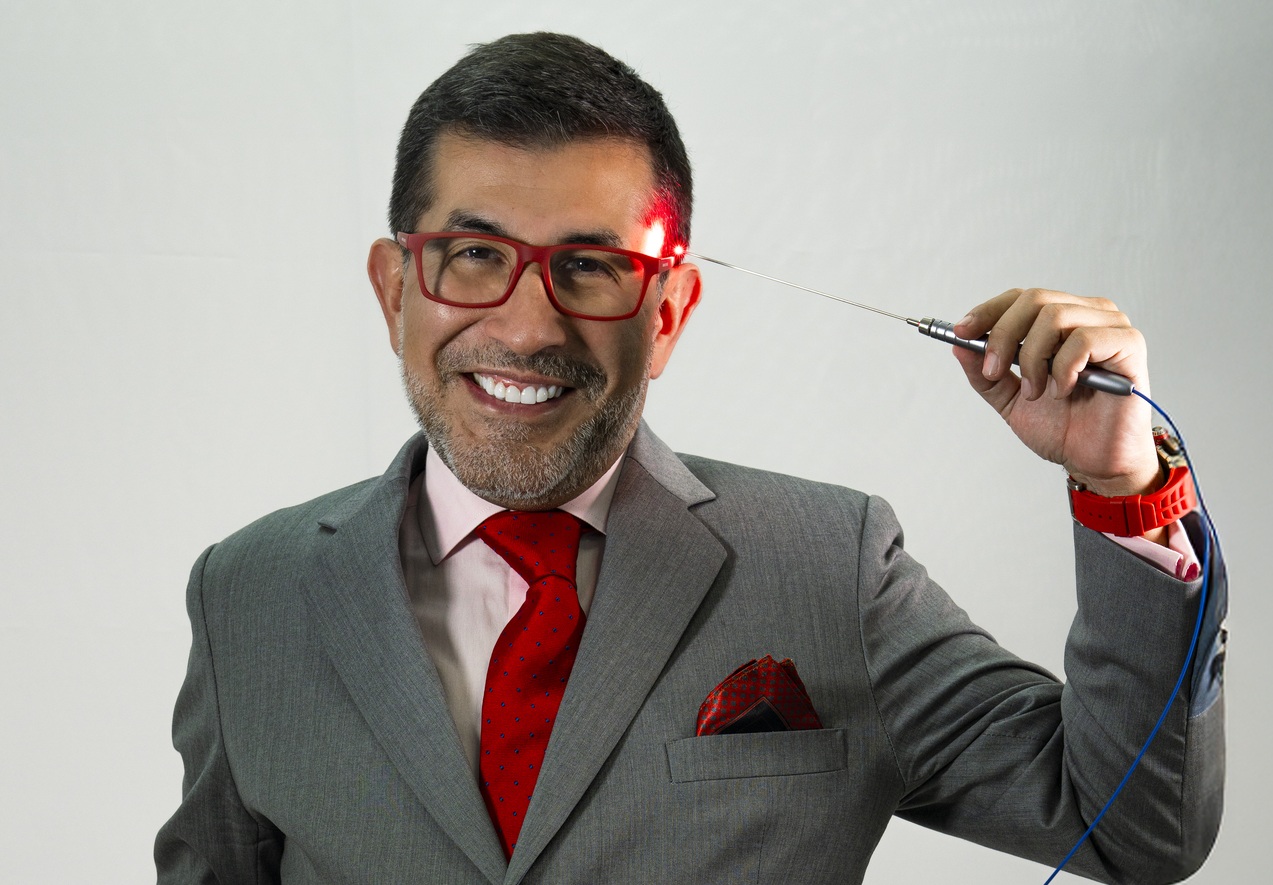
Gabriel Cubillos

Gabriel Cubillos

Gabriel Cubillos

Gabriel Cubillos

Gabriel Cubillos
Minimally invasive laser-assisted options are gaining ground in obesity care. Dr. Gabriel Cubillos explains benefits, limits, safety, and patient selection.
BOGOTá , CUNDINAMARCA, COLOMBIA, February 10, 2026 /EINPresswire.com/ -- With overweight and obesity affecting a growing share of adults across Latin America, clinicians and health systems are increasingly focused on approaches that go beyond short-term weight loss to prioritize long-term risk reduction, functional improvement, and patient safety. As part of that shift, minimally invasive, laser-assisted techniques—used in specific, medically selected cases—are receiving renewed attention as a potential complement to broader obesity management strategies.
Dr. Gabriel Cubillos, a Colombian physician and surgeon who has worked for more than three decades in the clinical management of obesity, overweight, and healthy aging, says the key question is no longer whether technology is “new,” but whether it can be integrated responsibly into a structured care plan. “Obesity is not a single-variable problem,” Cubillos said. “It’s multifactorial—metabolic, behavioral, and often emotional. Technology may be useful for selected patients, but it cannot replace diagnosis, follow-up, and sustained changes in lifestyle and health habits.”
Cubillos is the founder and Scientific Director of Clínica Obesidad y Envejecimiento, with operations in Bogotá and Mexico City, and he has participated in clinical education activities related to laser-based technologies. He has also referenced peer-reviewed publications and datasets that examine laser-assisted approaches in minimally invasive contexts and broader topics related to obesity medicine, including long-term challenges such as weight regain after metabolic surgery.
A public health challenge that requires more than “weight loss”
Obesity is widely recognized by medical authorities as a chronic, relapsing condition associated with increased cardiometabolic risk, reduced mobility, and a range of psychosocial impacts. In clinical settings, many patients seeking care report years of repeated dieting cycles, inconsistent guidance, and a persistent gap between short-term progress and sustainable outcomes. In that context, clinicians increasingly advocate for care models that emphasize continuity, individualized assessment, and realistic goal setting.
“Many people arrive at a clinic carrying both physical symptoms and frustration,” Cubillos said. “If the consultation becomes a moral judgment, patients leave. If it becomes a structured plan with clear steps, patients engage.”
He noted that modern obesity care often involves multi-domain assessment: medical history and comorbidities, body composition, nutrition patterns, activity levels, sleep, stress, and—when appropriate—pharmacological support or procedural interventions. “The medical decision is not ‘laser versus not laser,’” he said. “It is whether the patient has an indication for any intervention at all, and what combination of measures offers the best balance of benefit, safety, and adherence.”
What “laser-assisted” means—and what it does not mean
Interest in laser technology has grown across multiple clinical and aesthetic contexts, but experts emphasize that the term can be misunderstood. “Laser” is often used as a broad marketing label, yet clinical practice involves different energy-based systems and protocols, each with specific mechanisms and limitations. In minimally invasive body-contouring contexts, laser-assisted lipolysis has been studied and applied as an approach aimed at treating adipose tissue with smaller incisions and potentially less disruption compared with some traditional techniques—depending on the method, the patient profile, and the clinical setting.
Cubillos said that in obesity-related care, any minimally invasive tool should be framed carefully. “A technology can support a plan; it cannot become the plan,” he said. “For patients with obesity, the clinical goal must remain health improvement—not simply a number on the scale or a rapid cosmetic change.”
He added that terminology matters because it shapes expectations. “If a patient believes a device will ‘solve’ obesity, they may be disappointed or exposed to poor decision-making. If they understand it as an adjunct for selected cases under medical supervision, the conversation becomes safer.”
Candidate selection and safety: the non-negotiables
Cubillos emphasized that minimally invasive options are not universally appropriate and that the first step is medical evaluation. Candidate selection typically includes reviewing metabolic status, cardiovascular risk, medications, prior procedures, and lifestyle factors that affect recovery and long-term outcomes. It also includes a discussion of expectations: what results are plausible, what changes take time, and what requires ongoing effort.
“Responsible medicine is mostly about saying ‘no’ at the right time,” he said. “If a patient is not a candidate—due to health risks, unstable conditions, or unrealistic expectations—then the ethical decision is to redirect to safer pathways.”
He also noted that safety is not only about the procedure itself but about the system around it: sterile conditions, emergency readiness, qualified staff, and follow-up protocols. “Minimally invasive does not mean minimal responsibility,” he said. “It still requires a complete clinical framework.”
A clinical philosophy: reducing trauma where appropriate
Cubillos has described a guiding principle that aligns with a broader trend in modern medicine: reducing tissue trauma when the case allows. “The best scar is the one you don’t make,” he said, explaining that smaller incisions and less disruption may improve recovery experience for some patients. He emphasized, however, that less invasive options must not compromise clinical judgment. “The patient’s safety comes first. If a more comprehensive intervention is medically necessary, then it must be considered. The technique should follow the diagnosis, not the other way around.”
Clinicians often note that recovery experience can influence adherence to post-procedure recommendations. A patient who feels supported and well-monitored may be more likely to maintain follow-up visits, adjust nutrition and activity, and manage risk factors over time. For obesity care in particular, follow-up and habit-building are central to durable outcomes.
Evidence and clinical research: moving the discussion toward data
In public discourse, obesity treatments are frequently presented through simplified, success-story messaging. Cubillos said that, for medical audiences and journalists, the more relevant question is whether claims are supported by data and whether limitations are clearly stated.
He has referenced peer-reviewed datasets and publications examining laser-assisted approaches in minimally invasive contexts, including patient cohorts reported in scientific outlets, as well as clinical discussions about the broader obesity-care challenge—such as weight regain after metabolic surgery. While individual studies vary in design and endpoints, Cubillos said this type of research can help shift the conversation from anecdotes to measurable outcomes.
“Research is not about declaring a miracle,” he said. “It is about understanding where a technique may be useful, what outcomes it produces, what complications to monitor, and which patient profiles are more likely to benefit.”
He also stressed that evidence does not eliminate the need for individualized care. “A dataset can inform a protocol, but it cannot replace the clinical evaluation of a specific person,” he said.
Why obesity care increasingly requires long-term planning
Cubillos highlighted that obesity is often treated as a short-term project in popular culture, while medical practice points to the need for sustained planning. He noted that even when patients undergo major interventions, including metabolic surgery, long-term outcomes can be affected by multiple variables: physiology, behavior, sleep, stress, and access to ongoing care.
“Obesity medicine has taught us a hard lesson,” he said. “If follow-up is missing, improvements can be temporary. That is why we must design care in phases—assessment, intervention when appropriate, recovery, and a maintenance plan.”
This approach, he added, should be communicated transparently in public-facing messaging. “Patients deserve clarity. If a clinic implies that one procedure will permanently solve obesity without lifestyle and medical support, that is not accurate and it’s not responsible.”
Training and standardization: how innovation becomes safer
Cubillos has also been involved in professional training activities related to laser-based technologies, describing education as a necessary component of safe adoption. He has stated that he has trained thousands of physicians and surgeons in certain laser-based methods and protocols.
As minimally invasive techniques expand, medical organizations often emphasize the importance of professional standards: credentialing, evidence-based indications, informed consent, and complication management. “Innovation spreads fast,” Cubillos said. “Patient safety spreads only when training and protocols are treated seriously.”
He added that training should include not only technique but also patient selection and ethics. “In obesity-related care, the ‘how’ matters, but the ‘who’ matters just as much,” he said.
What patients should ask before considering any minimally invasive option
For the general public, Cubillos and other clinicians typically recommend a set of questions that can reduce risk and improve decision-making. These include:
Is the clinician qualified for this specific procedure and context?
What are the medical indications and contraindications for my case?
What are the realistic outcomes, and how will they be measured?
What are the risks and potential complications, and how are they managed?
What follow-up schedule will be provided—and for how long?
“Patients should be empowered to ask for clarity,” Cubillos said. “A serious medical team will not be offended by questions. It will welcome them.”
He also warned against absolute or guaranteed outcomes. “In medicine, certainty is rare,” he said. “Any messaging that promises guaranteed results for everyone should raise concern.”
Why interest in minimally invasive options is growing now
The growth of minimally invasive procedures reflects several trends: demand for shorter recovery time, improved surgical tools, and a public increasingly attentive to safety and quality. In obesity care, however, the trend intersects with stigma and emotion. Many patients delay seeking help because they fear judgment or believe they will be blamed for their condition.
Cubillos said that changing the tone of care can be as important as changing the tools. “If the patient is treated with respect, they engage,” he said. “If obesity is treated as a health condition—without shame—patients are more likely to pursue structured care.”
He added that minimally invasive options can sometimes serve as an entry point into broader health management. “For some patients, starting with a well-monitored step can create momentum,” he said. “But the long-term plan must still address habits, metabolism, and follow-up.”
Media education and public understanding
As public interest grows, clinicians and journalists face a shared challenge: differentiating medical information from promotional messaging. Cubillos said he supports clear editorial framing that explains both the potential value and the limitations of minimally invasive methods. “It’s not about hype,” he said. “It’s about helping people understand what is medically reasonable, what requires evaluation, and what should be avoided.”
He noted that public communication should encourage safe behaviors: verifying credentials, avoiding unregulated providers, and treating obesity as a medical issue rather than a cosmetic one. “A well-informed patient is less likely to make risky decisions,” he said.
Looking ahead: technology as a complement, not a substitute
Cubillos said he expects minimally invasive options, including laser-assisted techniques, to continue evolving alongside broader obesity-care advances. However, he emphasized that innovation should remain anchored in patient welfare and evidence. “The future is not ‘technology first,’” he said. “It is ‘patient first’—with technology as one tool among many.”
He concluded that the goal of responsible care is not dramatic messaging but measurable health improvements. “If we can reduce risk, improve function, and support the patient’s long-term plan—while using less invasive methods when appropriate—that is progress,” he said. “But it must be done with medical rigor, ethical communication, and follow-up.”
About Dr. Gabriel Cubillos
Dr. Gabriel Cubillos is a Colombian physician and surgeon with more than 30 years of experience in clinical work related to overweight, obesity, and healthy aging, including minimally invasive, laser-assisted approaches in selected cases. He is the founder and Scientific Director of Clínica Obesidad y Envejecimiento, with operations in Bogotá and Mexico City, and has participated in medical training activities involving laser-based technologies. He has referenced peer-reviewed publications and clinical datasets related to minimally invasive techniques and topics in obesity medicine.
Dr Gabriel Cubillos
Dr Gabriel Cubillos
+57 322 5711730
email us here
Visit us on social media:
Instagram
Facebook
Legal Disclaimer:
EIN Presswire provides this news content "as is" without warranty of any kind. We do not accept any responsibility or liability for the accuracy, content, images, videos, licenses, completeness, legality, or reliability of the information contained in this article. If you have any complaints or copyright issues related to this article, kindly contact the author above.
